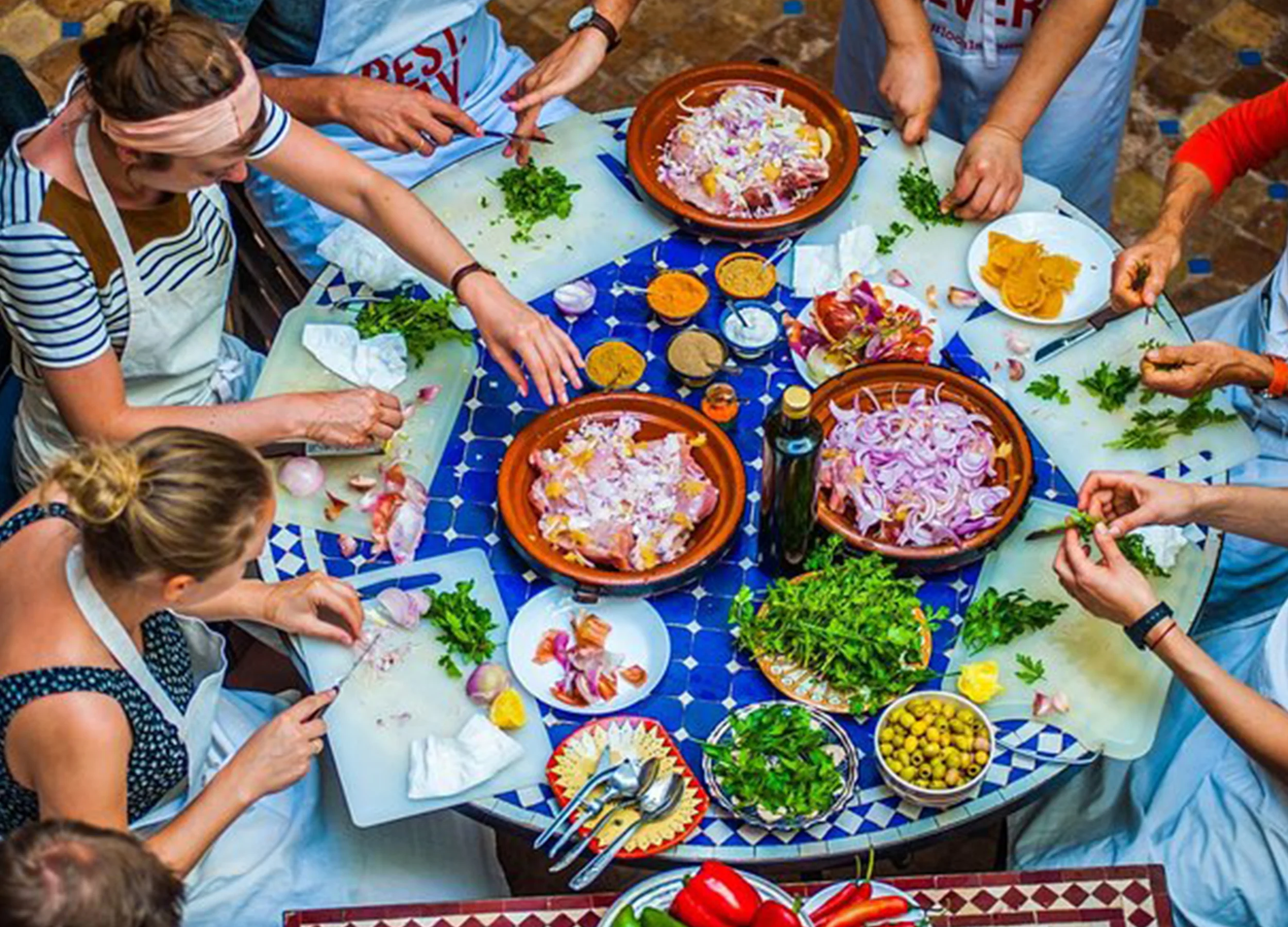
A tagine is two things at once: the cone-lidded clay pot, and the slow-cooked stew made inside it. The conical shape traps steam and recirculates it back down onto the food, which is why tagine cooking needs so little added liquid and produces meat that falls apart tender. Nearly every Moroccan restaurant menu centers around a handful of classic variations, and knowing the difference between them makes ordering — or cooking one yourself — much easier.
Ingredients are layered in the shallow clay base — usually onions first, then meat or vegetables, then spices and a small amount of liquid — and the tall conical lid is placed on top. As the pot heats, steam rises, condenses against the cool upper walls of the cone, and drips back down onto the food, continuously basting it. This is why traditional tagines use very little water compared to a Western stew, and why the low, slow heat (often over charcoal in traditional settings) matters so much to the result.
Family-run restaurants and home-hosted meals generally outperform hotel buffets, since tagine rewards the hours of slow cooking that a busy hotel kitchen rarely has time for. Marrakech's medina restaurants, riad dinners, and small neighborhood spots tend to serve more authentic versions than tourist-focused restaurants near the main squares. Our broader Moroccan food guide covers other dishes worth pairing with a tagine meal, like harira soup or fresh bread.
Because the technique matters as much as the recipe, the best way to actually understand tagine cooking is hands-on — grinding your own ras el hanout spice blend, learning how much liquid is really needed, and seeing how the layering affects the final texture. A guided Moroccan cooking class in Marrakech typically walks you through this from market shopping to the finished dish. For more background on the dish's origins and regional variations, see Wikipedia's overview of tajine.
If you buy a clay tagine to take home, season it before first use by soaking it in water and rubbing the interior with oil, and always start it on low heat to prevent cracking. When ordering in a restaurant, ask what's fresh that day — many places rotate which tagines they prepare depending on the morning market.
Cours de cuisine marocaine à Marrakech – Découvrez les saveurs du Maroc
Dites-nous ce que vous avez en tête et nous créerons un itinéraire privé autour de cela.
Obtenir un Devis Gratuit


