Moroccan mint tea, sometimes nicknamed "Berber whisky," is green tea brewed with fresh spearmint and a generous amount of sugar, poured from a height to create a light foam — and in Morocco it is less a beverage than a gesture of welcome, so accepting a glass when offered is part of the etiquette of any visit.
Where the tradition comes from
Tea arrived in Morocco largely through European and trans-Saharan trade routes in the 18th and 19th centuries, and Moroccans adapted it by combining Chinese gunpowder green tea with fresh local mint and sugar. Over generations it became woven into daily life: a way to open a business meeting, welcome a guest, close a meal, or simply pause in the afternoon. For more on its trade origins, see Wikipedia's entry on Maghrebi mint tea.
How it's traditionally brewed
Green tea leaves are rinsed briefly with hot water and discarded to remove bitterness.
Fresh mint sprigs and a generous amount of sugar are added to a metal teapot along with more hot water.
The tea steeps briefly, then is poured into a glass and back into the pot several times to mix and aerate it.
It's served poured from high above the glass, creating the characteristic foam ("the crown") on top.
Why the pour matters
Pouring from height isn't showmanship for its own sake — it aerates the tea, cools it slightly, and produces the foam that Moroccans consider a sign the tea was made properly. Watching a skilled host pour three glasses in a row without spilling is a small but memorable part of visiting a Moroccan home, riad or souk stall.
The etiquette of being offered tea
It's polite to accept at least one glass, even a small sip, when offered in a shop, home or during a tour stop.
Declining outright can read as impolite in some settings, though a genuine dietary reason will always be understood.
Tea is traditionally served three times from the same pot, sometimes said to represent life, love and death, each pour tasting slightly different as it steeps longer.
Bringing the tradition home
You don't need special equipment to approximate it: gunpowder green tea, fresh mint, sugar to taste, and a teapot with a long spout for the pour. Buying a traditional teapot and glasses in the souk is a popular, practical souvenir, and pairs naturally with the wider food culture covered in our Moroccan food guide.
Learn to make it properly
The best way to actually get the pour and the balance of mint and sugar right is to be shown, glass in hand, by someone who has made it every day of their life.
It's a playful nickname reflecting how central the drink is to daily social life and hospitality in Morocco, despite containing no alcohol.
Traditionally, yes — it's brewed with a generous amount of sugar, though many cafes will make it lighter on request if you prefer less sweetness.
It's considered polite to accept at least a small glass when offered, though a genuine dietary or health reason will generally be understood and respected.
Pouring from height aerates the tea and creates a light foam on top, which is traditionally seen as a sign the tea has been prepared well.
No. Being offered tea in a souk or shop is a hospitality gesture and does not create any obligation to purchase.
Chinese gunpowder green tea is the traditional base, combined with fresh spearmint leaves and sugar.

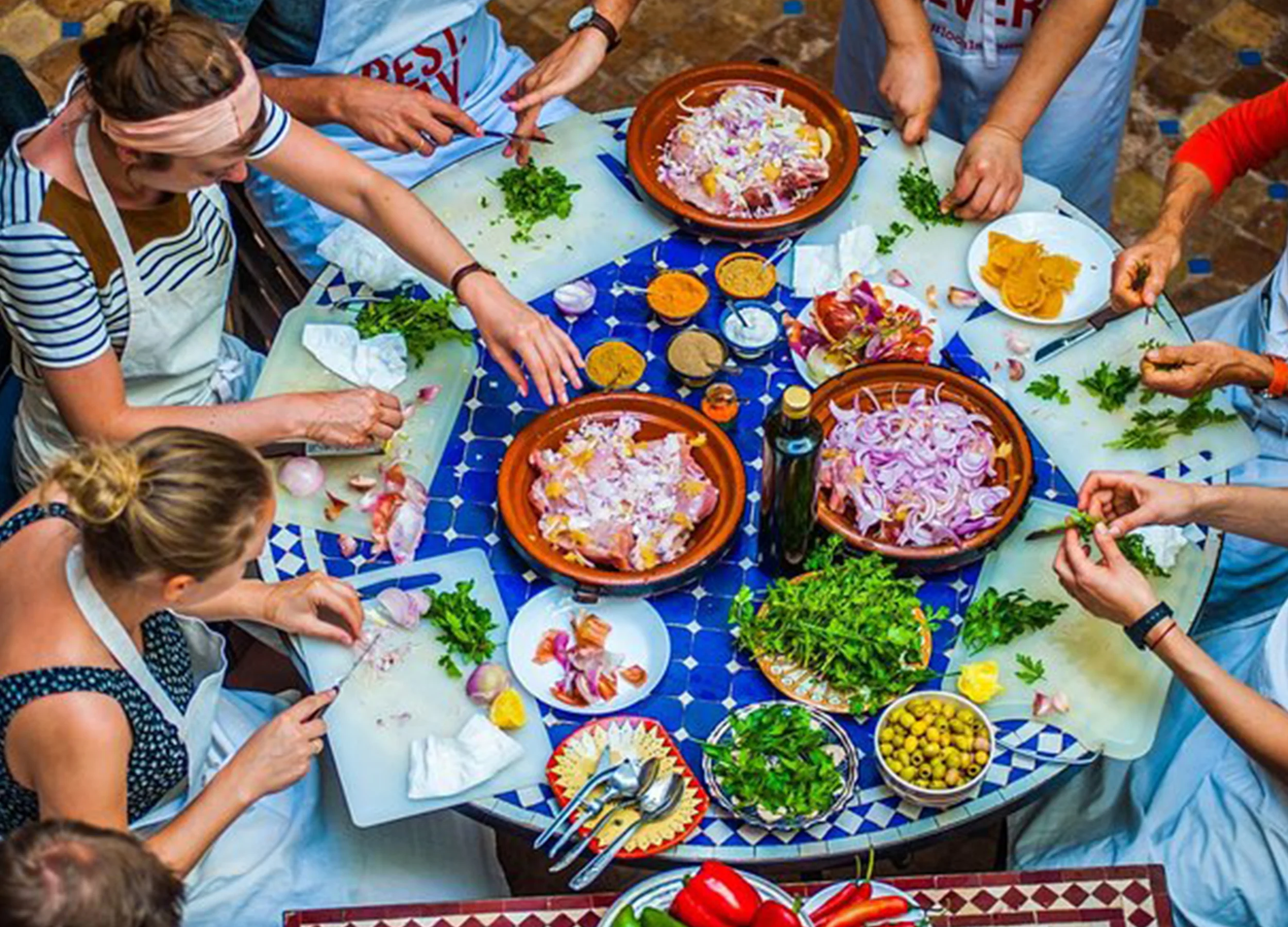 Cours de cuisine marocaine à Marrakech – Découvrez les saveurs du Maroc


