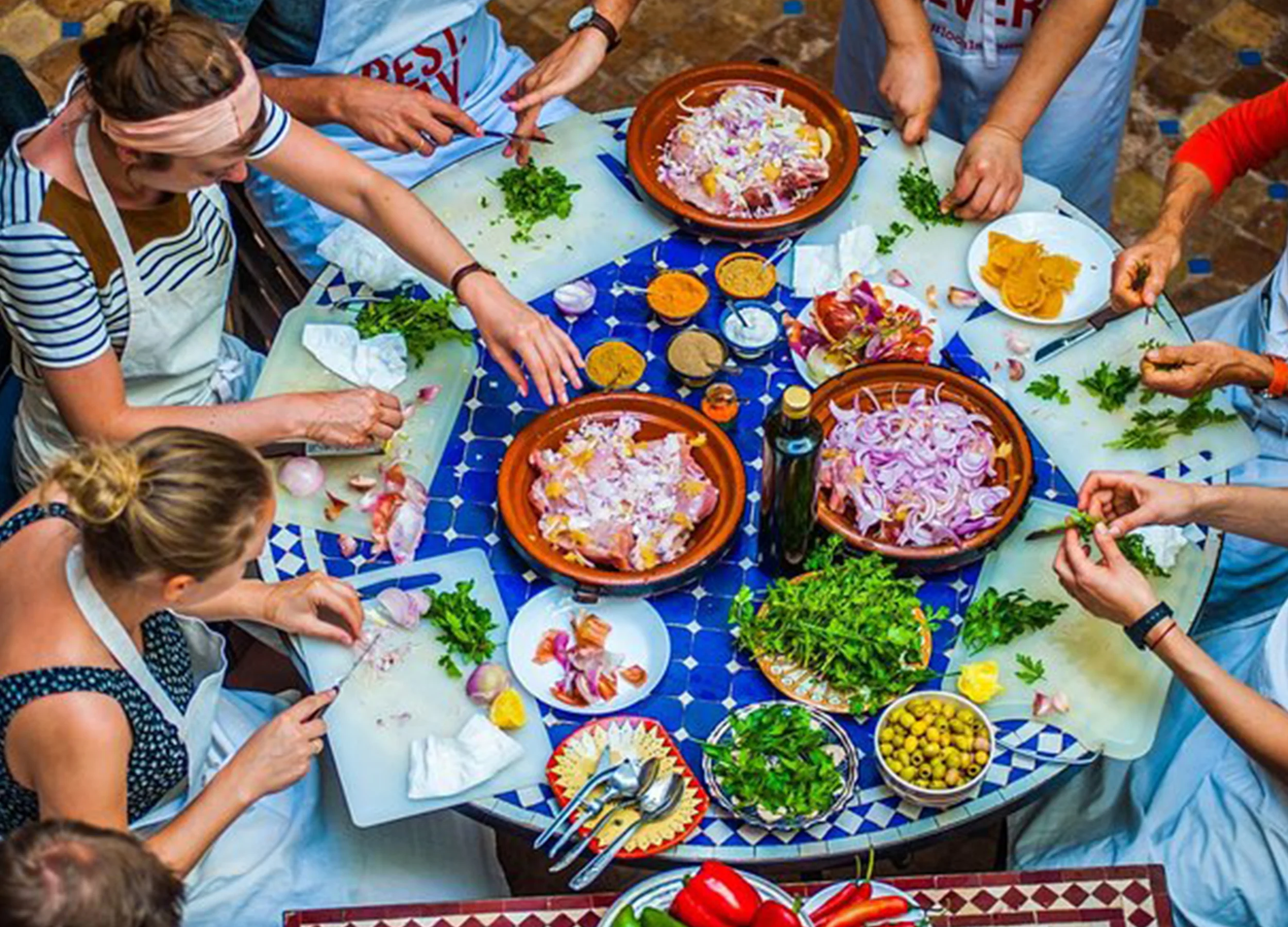
The Moroccan dishes worth prioritizing on your first trip are tagine, couscous, pastilla, harira, and mechoui — a slow-cooked lamb roast — and the best way to try them is in a family-run restaurant or on a home-hosted meal rather than a hotel buffet, since Moroccan cooking rewards patience and gets its flavor from hours of simmering, not shortcuts.
A tagine is both the conical clay pot and the stew cooked inside it. Meat, poultry or vegetables are layered with onions, preserved lemon, olives and a blend of spices — cumin, ginger, turmeric, cinnamon, saffron — then left to cook slowly so the steam recirculates inside the cone and keeps everything tender. Common versions include chicken with preserved lemon and olives, beef or lamb with prunes and almonds, and kefta (spiced meatballs) in tomato sauce with an egg cracked on top.
Couscous is more than a side dish in Morocco — it is a Friday ritual. Steamed semolina grains are piled with seven vegetables and a rich broth, topped with meat and sometimes a touch of sweetness from caramelized onions and raisins. Many restaurants only serve couscous on Fridays, so if you want the full spread, ask your riad or guide in advance.
Beyond sit-down meals, Morocco's street food scene is part of the experience. Look for msemen (square, layered flatbread) and baghrir (spongy "thousand-hole" pancakes) at breakfast, freshly squeezed orange juice from carts, and grilled brochettes at night markets. In the souks and around things to do in Marrakech, snail soup and freshly fried sardines are local favorites worth trying at least once.
Eat with your right hand and bread when you can, share plates rather than ordering individually, and don't be shy about asking a shopkeeper or riad host where they eat — the best meals in Morocco are rarely in the most visible spots. Budget travelers can eat extremely well; see our Morocco trip cost and budget guide for typical meal prices across different cities. For background on the cuisine's history and regional variations, Wikipedia's overview of Moroccan cuisine is a useful starting point.
If you want to take the flavors home with you, a hands-on class is the best way to understand how these dishes actually come together — from grinding your own spice blend to shaping pastilla by hand.
Join our Moroccan Cooking Class in Marrakech and learn to make tagine, couscous and pastilla with a local chef.
Tell us what you have in mind and we'll build a private itinerary around it.
Get a Free Quote