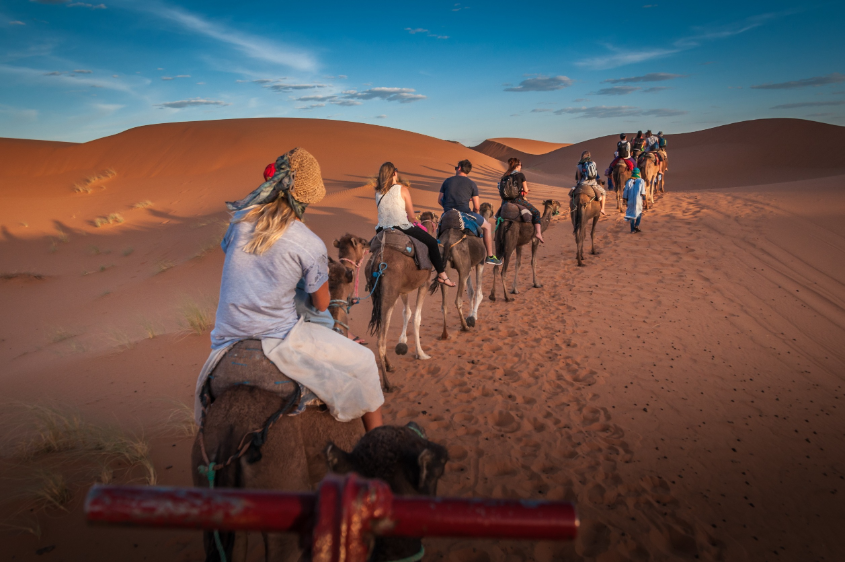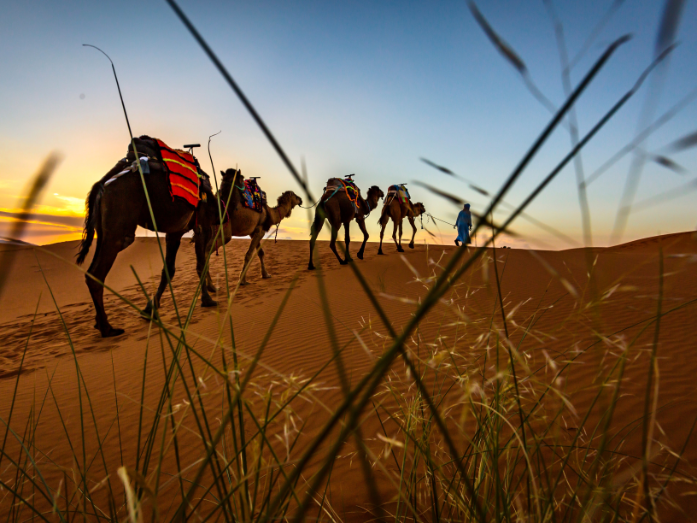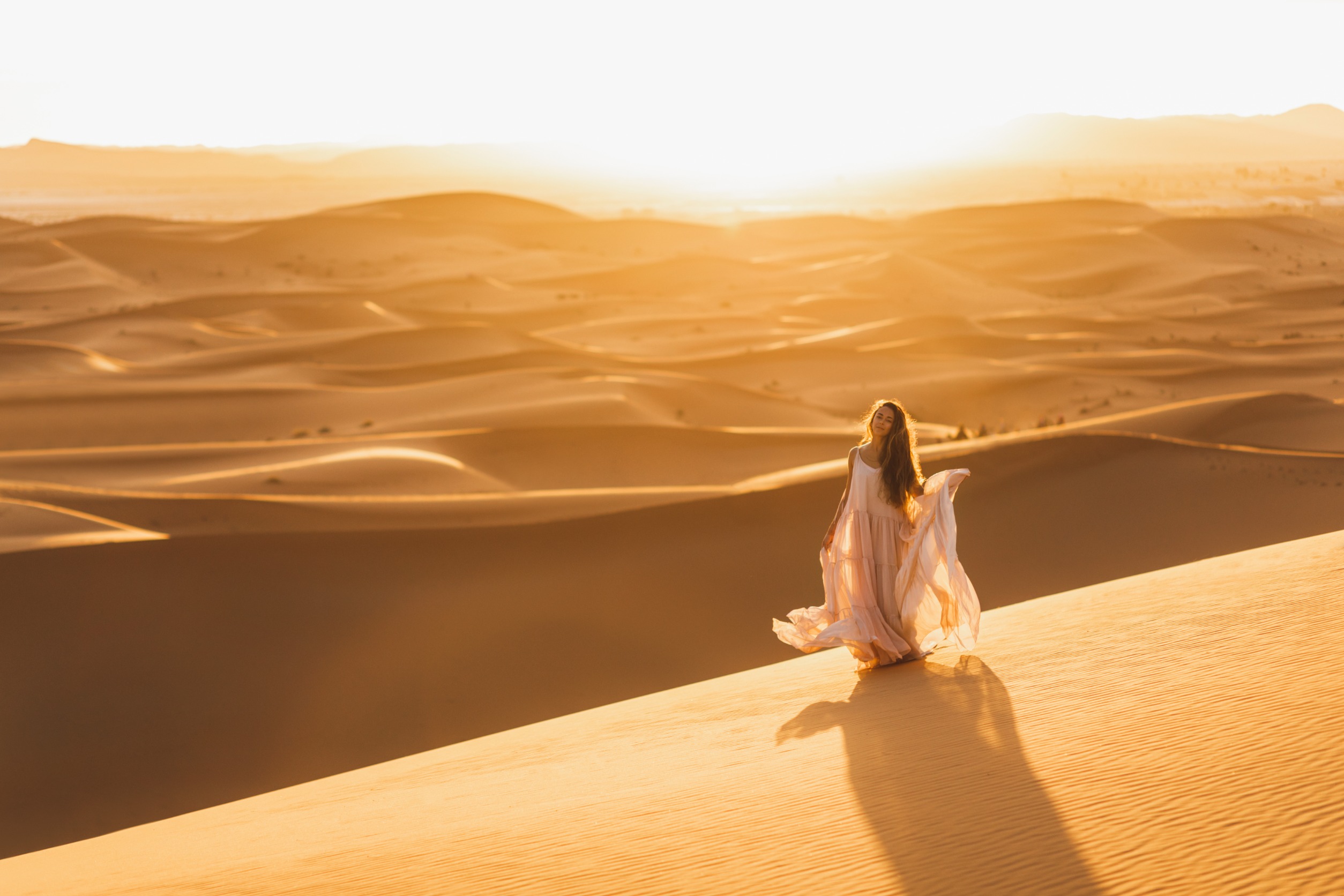
The real risks in the Sahara are dehydration, sunburn, and getting genuinely cold at night — not the dramatic scenarios (getting lost, sandstorms, wildlife) that first-timers often worry about most. A guided camp with an experienced local team removes nearly all practical risk, which is why almost no visitors attempt an independent desert overnight.
Daytime Sahara temperatures can exceed 40°C for much of the year, and the dry heat is deceptive because you sweat and evaporate moisture quickly without always feeling drenched. Dehydration and heat exhaustion are the most common real issues visitors face, especially during the camel trek portion in direct midday sun. Drink water consistently through the day rather than waiting until you're thirsty, and wear a wide-brim hat or scarf and sunscreen even if it doesn't feel that hot in the moment.
Desert nights, especially between November and February, can drop close to or below freezing even after a hot day — a huge swing that surprises travelers who packed only for heat. A proper desert camp provides blankets and warm layers, but bringing your own fleece or jacket for the evening and early morning is strongly recommended. See our Morocco packing list for a full breakdown of what to bring by season.
Independent desert camping without a guide is rare for good reason — it's easy to underestimate distances and temperature extremes in terrain with few reference points. Most travelers, including experienced ones, book a guided overnight such as a 3-day private desert tour from Marrakech to Fes rather than attempting it solo.
Sandstorms, scorpions, and getting seriously lost are rare concerns for a standard camp-based visit. Reputable camps monitor weather and would reroute or delay a trip in genuinely severe conditions, and camps are set up in areas with minimal wildlife encounters. The bigger everyday risk is simply sun and dehydration, which is fully preventable with basic precautions.
Carry more water than you think you need, use sunscreen and lip balm, pack a warm layer regardless of season, wear closed shoes for the camel trek and dune walking, and follow your guide's instructions around the camels. For broader safety context across the country, see our is Morocco safe for tourists guide, and Morocco's official tourism portal for current regional travel advice.
Visite privée du désert de 3 jours de Marrakech à Fès via Merzouga et la vallée du Dadès
Dites-nous ce que vous avez en tête et nous créerons un itinéraire privé autour de cela.
Obtenir un Devis Gratuit