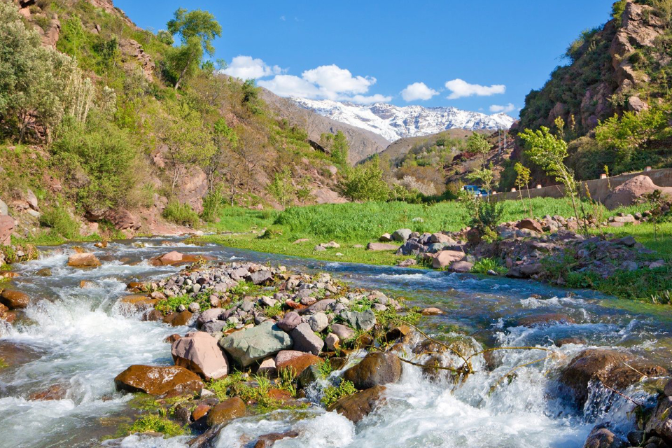
Setti Fatma is a Berber village about 90 minutes from Marrakech at the top of the Ourika Valley, known for a hiking trail that climbs past a series of seven waterfalls tumbling down the rocky hillside. The first waterfall is an easy 20-minute walk from the village, while reaching all seven involves scrambling over rocks and river crossings that take two to three hours round trip.
From the parking area in Setti Fatma, the trail follows the river upstream, crossing it several times on stepping stones or small wooden bridges. The first waterfall is the most visited and easiest to reach, with cafes built right into the rocks nearby serving tagine and mint tea within earshot of the falls. Continuing to the second and third waterfalls requires more scrambling over wet rock, and reaching the full seven is a proper hike best done with sturdy shoes and a local guide, since the unmarked upper sections are easy to lose the trail on.
Local guides wait near the trailhead and are genuinely useful here, both for route-finding on the upper falls and for a hand across the trickier river crossings.
Spring (March-May) brings the strongest water flow from snowmelt in the High Atlas, making the falls at their most dramatic. Summer keeps the trail dry and easy to walk but the waterfalls are noticeably thinner. Autumn is a comfortable middle ground, and winter can bring a cold river and occasionally icy rocks on the upper trail, so check conditions with a local guide before attempting the full hike in December-February.
Setti Fatma sits at the far end of the Ourika Valley road, so most visitors combine the waterfall hike with the wider valley drive — passing Berber villages, terraced farmland, and roadside argan oil cooperatives — as one full day trip from Marrakech. Our broader Ourika Valley day trip guide covers the full route in more detail, and a guided option like the Ourika Valley Berber Cultural Experience includes both the drive and a local lunch stop.
Wear shoes with grip rather than sandals, since wet rock near the falls gets slippery. Bring a change of socks if you plan on the river crossings, carry cash for the small riverside cafes, and expect to be approached by informal guides near the trailhead — agreeing on a price upfront avoids confusion later. For general trekking context in the region, UNESCO's page on the wider World Heritage sites in Morocco offers useful background on the country's protected landscapes.
Tell us what you have in mind and we'll build a private itinerary around it.
Get a Free Quote


