Morocco's currency is the dirham (MAD), a closed currency that cannot be bought or exchanged outside the country, so plan to exchange money on arrival or withdraw dirhams from an ATM rather than bringing them from home. Tipping is customary and expected for guides, drivers, and restaurant staff, generally in the range of 10-20 dirhams for small services and around 10% at restaurants.
ATMs are widely available in cities and tourist areas and generally offer a straightforward exchange rate, though your home bank may charge a foreign transaction fee. Currency exchange offices at airports and in medinas are also common and usually offer competitive rates without a transaction fee, making them worth comparing against ATM withdrawals for larger amounts. Because the dirham is a closed currency, remember to convert any leftover dirhams back before leaving Morocco, ideally at the airport, since it's difficult to exchange abroad.
Larger hotels, restaurants and shops in Marrakech, Fez and Casablanca generally accept credit cards, but cash is still king with small vendors, taxis, and rural guesthouses. We recommend carrying a reasonable amount of cash at all times and treating card acceptance as a bonus rather than the default, especially outside the largest cities.
| Who | Typical Tip |
|---|---|
| Restaurant staff | Around 10% of the bill |
| Private tour guide (full day) | 100-150 MAD |
| Driver (per day) | 50-100 MAD |
| Riad housekeeping | 20-50 MAD per stay |
| Hammam attendant | 20-30 MAD |
| Porter/bellhop | 10-20 MAD per bag |
The most common mistake we see is travelers arriving with no cash at all, assuming cards will cover everything, and then struggling in smaller towns or with taxi drivers who don't take cards. The second is not agreeing a taxi fare or henna/photo price upfront, which almost always leads to an inflated demand afterward. Both are easy to avoid with a little planning before you land.
Good money habits pair naturally with smart shopping; our Marrakech souks shopping guide goes deeper into bargaining specifics, and if a hammam visit is on your itinerary, our Moroccan hammam guide covers tipping and etiquette there too. For background on the currency itself, see the Moroccan dirham overview.
Want a trip that already accounts for cash needs and tipping in the planning? Get a free custom quote and we'll walk you through it.
Generally no; the dirham is a closed currency rarely available outside Morocco, so plan to exchange money or withdraw cash after you arrive.
For a full-day private guide, 100-150 MAD (roughly $10-15) is a typical and appreciated tip.
They are accepted in larger hotels, restaurants and shops in major cities, but cash remains essential for souks, taxis and smaller towns.
No, it is an expected and normal part of souk shopping; vendors anticipate negotiation and initial prices are set with that in mind.
Rates fluctuate with markets, so we recommend checking a current currency converter before your trip rather than relying on a fixed figure.
Yes, around 10% of the bill is standard for restaurant staff, similar to European tipping norms.
 Circuit Privé de 4 Jours dans le Sahara depuis Marrakech : Sites UNESCO, Vallée du Dadès et Désert de Merzouga
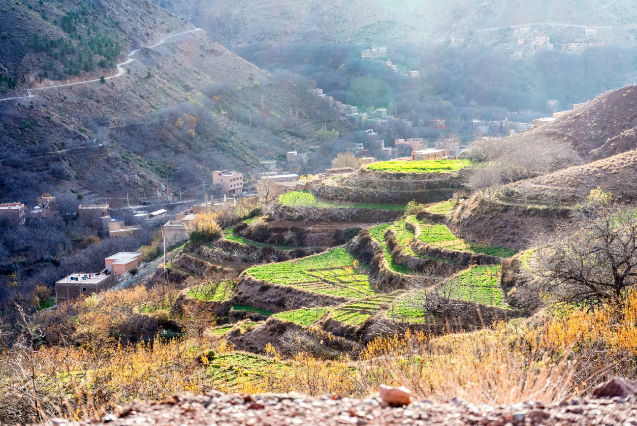 Atlas et Vallée d'Imlil : Aventure Privée d'une Journée
Dites-nous ce que vous avez en tête et nous créerons un itinéraire privé autour de cela.
Obtenir un Devis Gratuit