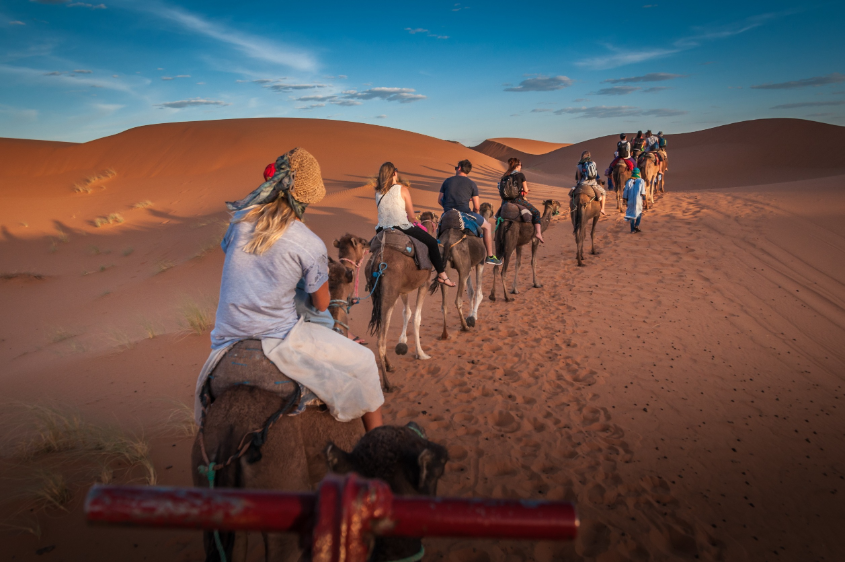
A Sahara camel trek in Morocco typically lasts 45 minutes to an hour each way, carries you from the roadside into the dune camp in single file behind a handler, and feels less like riding and more like being gently rocked from side to side — uncomfortable for the first ten minutes, then surprisingly relaxing.
Camels (dromedaries, technically, since they have one hump) are led in a roped line by a local handler, usually on foot. You don't steer or control the animal yourself; you simply sit, hold the front of the saddle, and let the handler guide the caravan. Most treks happen at the start and end of a desert camp stay — one trek in at dusk to reach camp, and one trek out the next morning, sometimes replaced by a sunrise walk up a nearby dune instead.
Mounting and dismounting are the trickiest parts: the camel kneels, lurches backward as it rises onto its back legs, then forward onto its front legs, which catches first-timers off guard. Once moving, the gait is a slow side-to-side sway rather than a bounce, and most riders adjust within the first few minutes. Sitting toward the front of the saddle and keeping your core engaged reduces strain on your lower back over the full hour.
Almost every desert camp offers a 4x4 transfer as an alternative for anyone who'd rather skip the ride but still reach camp — just ask when booking.
Loose, breathable clothing works best, along with closed shoes rather than sandals since sand gets kicked up along the route. A scarf or shesh protects your face from blowing sand and the sun, and a light jacket is worth carrying even in summer, since desert temperatures drop fast after dark. If you're building a full kit for the trip, our Morocco packing list covers everything else you'll want for the desert leg specifically.
The trek itself is broadly similar wherever you go, but the camp at the other end varies enormously — from simple shared tents to private ensuite setups. Our guide to luxury vs standard desert camps breaks down exactly what differs so you know what you're booking before you commit. Historically, camel caravans crossed the Sahara for trade rather than tourism; you can read more about that history on Wikipedia's Sahara overview.
Bring a phone or camera with a strap, since photos from camelback with the dune shadows at golden hour are some of the best you'll take in Morocco. Relax your shoulders, trust the handler, and treat the ride itself as part of the experience rather than just transport — it's often the moment travelers remember most vividly from the whole desert trip.
Want a full camel trek and overnight desert camp built into a fixed itinerary? See our 2-Day Sahara Tour to Zagora with camel trek and luxury camp included.
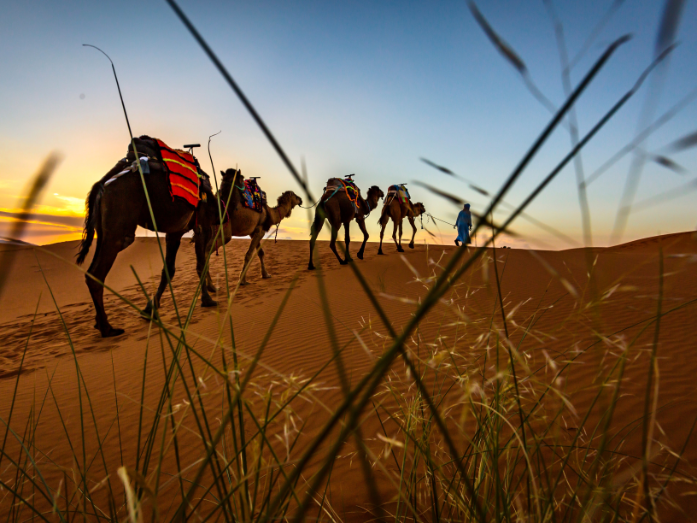 2-Day Private Sahara Tour: Marrakech to Zagora, UNESCO sites, Camel Trek & Luxury Camp
Tell us what you have in mind and we'll build a private itinerary around it.
Get a Free Quote